
Patch backing overview
A patch backing is the layer applied to the reverse of a finished patch that determines how it attaches: iron-on adhesive film, hook-and-loop (Velcro), plain sew-on, or peel-and-stick adhesive. The patch face is unaffected — backing is an attachment decision about permanence, washing, and whether the patch needs to be removable.
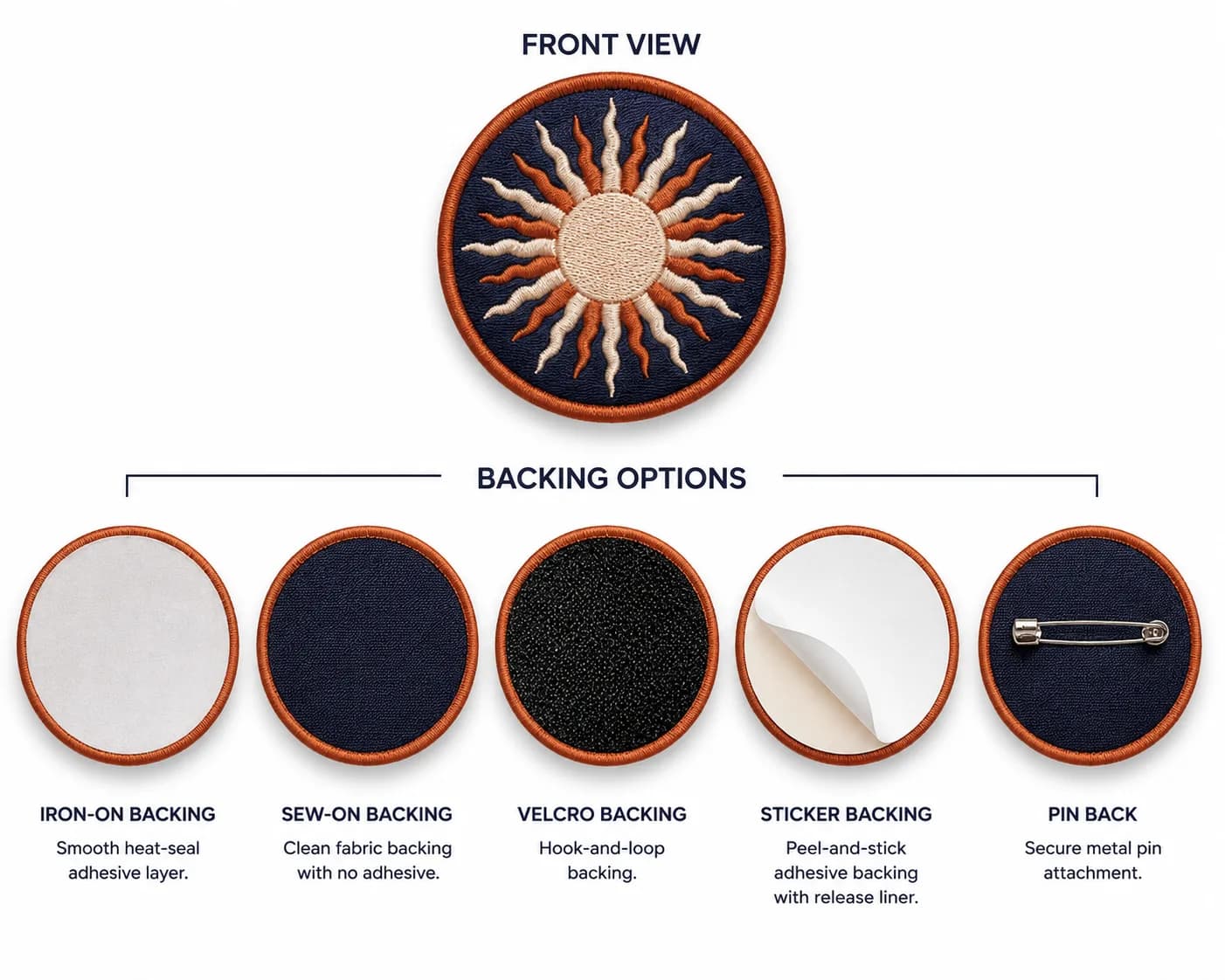
Illustration — not a photograph of a specific order.
From our production data
Across the orders we produce, backing choice is lopsided: iron-on 81.2%, Velcro 8.8%, sew-on 7.1%, and adhesive 2.9%. Most buyers never weigh the four options — they take the default.
When to choose it — and when not to
Match the backing to the garment's life: iron-on for normal wear, sew-on for workwear and uniforms washed constantly, Velcro when the patch must be swapped or removed, adhesive for temporary event and display use.
When unsure, iron-on plus a few stitches around the edge is the most durable combination — heat bonds it flat, thread keeps it there through years of washing.
Related: Sew-on patches · Adhesive patches · Backings 101 guide · Glossary: Iron-on patch

Written by Imran Raza, Founder of Panda Patches
13+ years in custom patch manufacturing. Figures on this page come from Panda Patches’ own production records.
Published July 21, 2026 · Last reviewed July 21, 2026
Cite this entry
Source: Panda Patches Glossary — “Patch backing overview.”
https://www.pandapatches.com/glossary/patch-backing