
Custom Iron-On Patches
Heat-Seal Backing, From 5 Pieces, Free Worldwide Shipping
Iron-on adhesive backing on every patch type. Properly heat-pressed, the bond is near-permanent and both machine washing and dry cleaning are safe. Mockup in 12 to 24 hours. Money-back guarantee on every order.
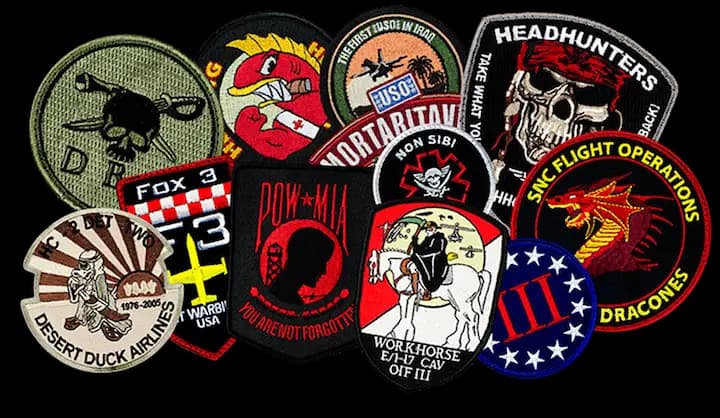
Patches Delivered
1 Million +
Get Your Free Bulk Quote
Mockup in 12-24 hours. We respond within 2 hours.
Patches Made For Teams At




What customers say about working with us
Rated 4.8/5 on Trustpilot from 116 reviews — checked 3 November 2026
Reviews of our company and service on Trustpilot, not ratings of Custom Iron-On Patches specifically.
Read all customer reviewsWhich Patch Types Support Iron-On?
Every patch type accepts iron-on backing. What differs is how it is applied: most types are pressed from the front, while PVC, chenille and embroidered heat transfers are pressed from behind so the heat never touches the rubber face, the yarn pile or the embroidery, and silicone can go either way. Here is the full matrix. Across our own published order data, 81.2% of orders chose iron-on backing (758 of 934, 8 December 2025 to 5 August 2026). 94.9% of chenille orders ship with iron-on (166 of 175, 8 December 2025 to 5 August 2026), including most letterman jackets. It is the default for most patch types precisely because the compatibility list below is so wide. Exact settings by material are in the press settings table.
| Patch Type | Iron-On? | Default Backing | Notes |
|---|---|---|---|
| Embroidered | Yes | Iron-on or sew-on | Most common combo. Free. |
| Woven | Yes | Iron-on or sew-on | Fine detail option. Free. |
| Printed (Sublimation) | Yes | Iron-on or sew-on | Unlimited colors. Free. |
| Sequin | Yes | Iron-on or sew-on | Press from the front through a cloth; sequins sit in a stitched base, so standard settings apply. Free. |
| Leather | Yes | Iron-on or sew-on | Premium hat brands. Free. |
| PVC | Yes | Iron-on, sew-on or Velcro | Press from behind only, 25–30 seconds. Direct front heat melts the rubber. |
| Chenille | Yes | Iron-on, sew-on or Velcro | Press from behind only, 20 seconds, no adhesive spray. Direct heat flattens the pile. Includes chenille TPU and glitter chenille, and chenille letters. |
| Silicone | Yes | Heat press only | Press at 350°F (177°C) for 15 seconds, from the front or the back. Silicone does not burn. |
| 3D embroidered transfers | Yes | Heat press only | Press from behind at 340°F (171°C) for 20 seconds, on the reverse of the garment, not on the embroidery. |
For the full backing compatibility breakdown including Velcro and adhesive sticker options, see the specs and care guide.
How Much Do Custom Iron-On Patches Cost?
Iron-on backing is standard at no upcharge on custom embroidered patches, as well as woven, printed, and leather. Pricing is the base patch price for the chosen type, size, and quantity.
| Patch Type | At 50 pcs | At 100 pcs | At 500 pcs | At 1,000 pcs |
|---|---|---|---|---|
| Embroidered iron-on | $3.92/pc | $2.55/pc | $1.18/pc | $1.04/pc |
| Woven iron-on | $5.36/pc | $3.97/pc | $3.10/pc | $2.49/pc |
| Printed iron-on | Calculator quote | Calculator quote | Calculator quote | From $0.71/pc at 5,000 |
| Leather iron-on | $5.58/pc | $4.61/pc | $2.64/pc | $1.84/pc |
Prices shown are per piece for a 3-inch patch, computed live from our calculator. For exact quotes at any size or quantity from 5 upward, the calculator on each product page returns a per-piece price instantly. See the full pricing breakdown.
How To Apply An Iron-On Patch
This six-step process works on embroidered, woven, printed, sequin, and leather iron-on patches on cotton, denim, canvas, and most natural-fiber fabrics. Total time is roughly 90 seconds per patch including cool-down. Leather uses the same settings, with one step that stops being optional — see the note below.
Preheat the iron
350°F (177°C), no steam.
Position the patch
Adhesive-side down on the garment in the desired location.
Cover with a pressing cloth
Thin cotton cloth or pressing sheet protects both the patch and the iron.
Press for 25-30 seconds
Firm pressure straight down. Do not slide the iron. Heavier fabrics need longer and firmer pressure than a t-shirt.
Press from the back
Flip the garment inside out and press for 10 seconds. PVC is the exception: press PVC from behind only, the full 25-30 seconds, or the front heat melts it.
Cool completely
Let the patch cool fully. Once properly pressed the bond is near-permanent, and machine washing and dry cleaning are both safe.
Leather: the pressing cloth is not optional
Leather patches carry the same heat-seal adhesive as our embroidered patches, so they take the same settings — 350°F (175°C), no steam, 25 to 30 seconds from the front, 10 seconds from the back. Do not press them cooler or shorter; the adhesive still needs its full activation.
The one difference is step 3. On woven and embroidered patches the pressing cloth is good practice; on leather it is required. A hot iron placed directly on a leather face can stick to it or scorch it. Keep a thin cotton cloth or pressing sheet between the iron and the patch every time, and the same 350°F press that would mark bare leather applies it cleanly.
We learned this from a real order — 1,200 woven and leather patches where the leather needed application fine-tuning after delivery. That order is written up in full, including what went wrong: Karbach Brewing, 1,200 woven and leather patches. If your order mixes materials, ask us for the per-material pressing guidance instead of applying one setting to everything, or read the full patch manufacturability specifications — the versioned standard these temperatures come from.
For long-term durability on garments washed frequently (work uniforms, game jerseys, items washed 30+ times per season), reinforce the iron-on with a few stitches around the edge. This hybrid iron-on plus sew-on attachment is the most permanent option.
A real example: a Pittsburgh fan club's 11-inch back emblems, with iron-on backing applied with a heat press.
Order Custom Iron-On Patches With a 12 to 24 Hour Mockup
Custom iron-on patches are the easiest way to brand a hat, jacket, backpack, or t-shirt without sewing. Panda Patches produces iron-on backing as standard on embroidered, woven, printed, and leather patches with no upcharge. The 5-piece minimum applies on every type. Every order ships with free worldwide shipping, a digital mockup delivered in 12 to 24 hours, unlimited free revisions, and our money-back guarantee.
Iron-on patches work best on cotton, denim, canvas, and most natural-fiber garments. They are not the right choice for nylon athletic wear, polyester performance fabrics, waterproof shells, or industrially-washed uniforms. For heat-sensitive or specialty fabrics, choose sew-on or Velcro backing instead. For garments washed frequently, reinforce the iron-on edge with a few stitches for permanent attachment.
Iron-On Patches FAQ
Yes. Typically around 50 home washes when applied as instructed (cold or warm, garment inside out); sew the edges for permanent wear. That is an estimate, not a guarantee. For garments washed more than 30 times per season such as game jerseys, work uniforms, or industrial wash items, sew-on backing is the more reliable long-term choice. Reinforcing an iron-on patch with a few stitches around the edge extends bond life significantly.
Every patch type takes iron-on: embroidered, woven, printed (sublimation), leather, sequin, chenille (including TPU and glitter), PVC, silicone and 3D embroidered transfers. What changes is the technique, not the availability. Embroidered, woven, printed, leather and sequin are pressed from the front. PVC, chenille and embroidered heat transfers are pressed from behind, through the garment, so the heat reaches the adhesive without touching the molded rubber, the yarn pile or the embroidery. Silicone can be pressed from the front or the back, because it does not burn. Sew-on and Velcro (hook-and-loop, charged separately on every order) remain available on most types; silicone and embroidered heat transfers are heat-press only.
Yes. Iron-on patches can be sewn directly through the adhesive backing. Many buyers iron the patch on first to hold it in position, then sew around the edge for permanent attachment. This hybrid application is the standard approach for garments that will be washed frequently or used in high-wear conditions.
5 pieces, and no minimum beyond that. The 5-piece minimum applies across every iron-on patch type: embroidered, woven, printed, leather, chenille, PVC, silicone and 3D transfers alike. For a 2-inch embroidered patch, 5 pieces with iron-on backing is $120.01 total (about $24.00 each), as of November 2026. There are no setup fees, no digitizing fees, and no small-order surcharges. The 5-piece tier uses the same materials, the same Pantone color matching, and the same money-back guarantee as a 1,000-piece order.
Step 1: preheat a household iron to 350°F (177°C) with no steam. Step 2: place the patch adhesive-side down on the garment in the desired position. Step 3: cover with a thin cotton cloth or pressing sheet. Step 4: press straight down with firm pressure for 25 to 30 seconds. Do not slide the iron. Heavier fabrics need more time and pressure — a 500gsm hoodie takes longer than a t-shirt. Step 5: flip the garment inside out and press from the back side for another 10 seconds. Step 6: let the patch cool completely before handling. Two materials are exceptions. PVC: press from behind only, for the full 25 to 30 seconds, because direct front heat melts the PVC. Leather: same temperature and same timings, but the step 3 pressing cloth is mandatory, not optional — never let the iron touch the leather face directly, or it can stick or scorch. Once properly heat-pressed the bond is near-permanent, and machine washing and dry cleaning are both safe.
Yes. Press a patch on a hat or cap at the same settings as its patch type, using a cap press with a curved platen. A household iron is not recommended on caps.
Yes. Reheat the patch through a cloth for 15 to 20 seconds, peel it off while it is warm, then lift any adhesive residue with rubbing alcohol. It does not come off cleanly from leather or waterproof fabrics.
Iron-on patches work well on hats, casual jackets, denim, canvas backpacks, cotton t-shirts, polos, hoodies, scout uniforms, sashes, and tote bags. They work less reliably on heat-sensitive fabrics (nylon, polyester athletic wear, vinyl), waterproof or coated fabrics, ribbed knits, and structural turnout coats or active firefighting gear. For heat-sensitive or specialty fabrics, sew-on or Velcro backing is the safer choice.
Iron-on is standard backing on all eligible patch types, so iron-on patches are priced the same as the base patch with no backing upcharge. Embroidered iron-on starts at $0.91 per piece at 2x2 inches and 1,000 pieces; smaller orders cost more per piece (about $2.55 each at 100 pieces and $3.92 each at 50, for a 3-inch patch). Woven iron-on starts at $1.54 per piece and printed iron-on at $0.74 per piece, both at 2x2 inches and 1,000 pieces. The published per-piece price includes free worldwide shipping, the digital mockup in 12 to 24 hours, and unlimited free revisions.

Get Your Free Mockup. Takes 60 Seconds.
Share your artwork or idea. We send a full-color mockup within 24 hours. Zero risk, no setup fees.